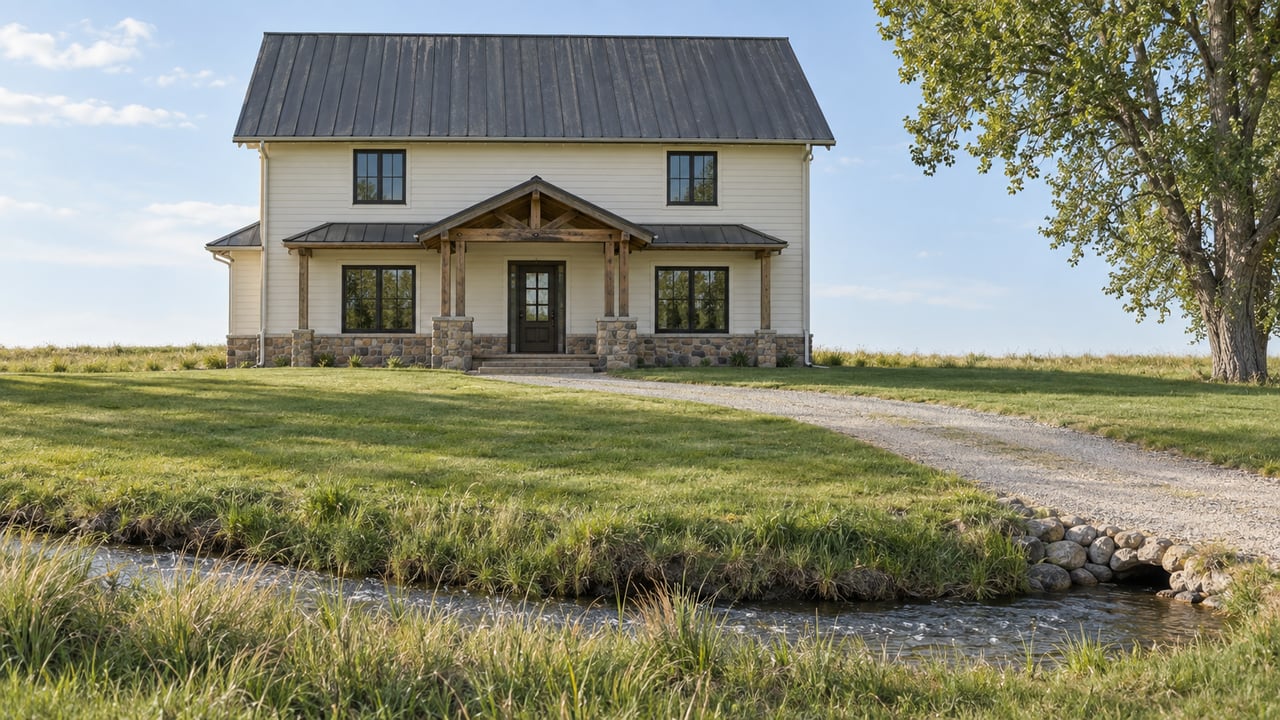
Cody Jackson, quoted in the Bozeman Daily Chronicle, watched his ranch yard fill with vans, pickups, and strangers carrying meat sticks and candy and called the whole thing "like going to the Town Pump." That's about as dramatic as it got. Jackson runs KG Ranch, the 26,000-acre cattle operation southwest of Three Forks that doubled as the Clyburn family spread in Taylor Sheridan's Paramount+ series "The Madison." Crews came back four or five times across 2024 and 2025. Then they left, and the herd of roughly 800 mother cows went back to grazing like nothing happened.
If you live in Three Forks, you've probably heard some version of this story by now: your town is on television, Michelle Pfeiffer and Kurt Russell filmed scenes down the road, the show became the biggest series debut of Sheridan's career. All of that is true. None of it explains what's actually different about your town this year. That story is a lot less about Hollywood and a lot more about a brewery's trophy case, a farmstand's grant application, and a pharmacy that ran out of room in the back.
What Six Weeks of Filming Actually Looked Like
The production spent over six weeks in Three Forks during the fall of 2024, with additional visits through 2025, working mostly at KG Ranch and the Three Forks Rodeo Grounds. City Treasurer Kelly Smith watched it happen from City Hall and came away distinctly unimpressed by the disruption.
In the Bozeman Daily Chronicle, she said: "A lot of them were staying in Bozeman or Belgrade, and their meals were catered, so there wasn't a big change in business in town. Other than a little extra traffic on Kyd Road, and some lights from night filming, I didn't really notice it."
That's the part the national coverage skips. The crew paid the city for water to spray on Kyd Road and keep the dust down during shoots, then left the rodeo grounds cleaner than they found them, according to Smith. No local restaurant boom. No sudden run on hotel rooms, because there weren't hotel rooms being booked in town to begin with. Robert Gifford, who owns Cowboy Basics Trading Post, watched the same low-key version of events play out. The show that borrowed the Madison River's name for its title barely rippled the actual water.
That's worth sitting with, because the instinct when a Taylor Sheridan production shows up is to expect a Yellowstone-style transformation. A University of Montana study once put the economic impact of the Yellowstone franchise's Montana filming at more than $834 million statewide, spread across carpenters, caterers, wranglers, and hotel staff. Three Forks didn't see a slice of that kind of money, because the production's Montana footprint here was a working ranch and a set of bleachers, not a town full of extras and craft services.
The show got renewed for a third season, and it posted 8 million views globally in its first ten days, the biggest launch of Sheridan's career according to Paramount's own release. None of that changed what's open on Main Street or what time the pharmacy closes.
The Brewery That Actually Grew
While the show was quietly coming and going, Bridger Brewing was doing something with real, measurable local impact. In March, the brewery's Three Forks location helped it walk away with Large Brewery of the Year at the 2026 Montana Beer Awards in Helena, taking home 10 medals out of 13 entries, five of them gold, more than double the next closest brewery's count. The winning lineup included Pacific Pilsner, Vigilante IPA, Lee Metcalf Pale Ale, Peaks to Peach Wheat Ale, and Antilogy Black IPA.
Head brewer Jason Brenden put the scale in plain terms: Bridger Brewing opened in Bozeman in 2013 and added its Three Forks location four years later; the Three Forks facility can now produce around a million cans of beer a year, distributed across Montana and into Wyoming. That's an actual production footprint sitting right off I-90 at Exit 274, across from Wheat Montana. Unlike a six-week film shoot, that capacity doesn't pack up and drive to Texas when the season wraps.
The brewery also anchors a calendar that didn't exist a decade ago. Its signature events, the Bridger Brewskis and Spurs Skijoring competition and the annual Headwaters Lager Festival, which pulled in 17 breweries for its third running this past May, have become fixtures locals plan around. The 2026 summer concert series brought the Gin Blossoms and Spin Doctors to the Vigilante Way stage on July 12, the kind of national-touring-act booking that's harder to find in a town of roughly 2,000 people than it sounds.
The Smaller Changes That Add Up
None of the rest of this year's news made a Rotten Tomatoes page, but it's the stuff that actually shapes a week in Three Forks.
- Old Town Farmstand, at 275 Old Town Road, was one of 25 recipients statewide of Montana Department of Commerce Agritourism Grant funding this year, receiving $9,900 toward a four-season classroom. That's a small dollar figure against the state's $445,000 total pool, but it's the kind of local investment that shows up as an actual building, not a press release.
- Three Forks Family Pharmacy is finishing a remodel that added a new pharmacy area toward the back of its existing location. Operations manager Kaitlin Campbell described it as giving the team room to keep pace with a growing community, which is a mundane sentence until you notice it's an admission that the town has outgrown its old back room.
- The Three Forks Chamber of Commerce pitched the City Council on a new Visitor's Center at John Q. Adams Milwaukee Railroad Park, the same park that hosts the town's farmers market. Chamber President Whitney Carr described it as a headquarters for the town. It's still a proposal, not a groundbreaking, but it's the first serious push for a dedicated visitor space in a town that currently doesn't have one.
- Living Sky Grains, a direct-to-consumer grain operation in Three Forks, hosted Montana's Director of Agriculture, Jillien Streit, in May as part of her tour highlighting businesses "adding value to the state's agricultural ecosystem." It's a small visit, but it's the kind of state-level attention that tends to precede grant cycles and expansion, not the kind that follows a film crew out of town.
- The farmers market is back on the Milwaukee Railroad Park lawn this fall, with its next date set for September 24, and it remains the low-key gathering point the Chamber wants to eventually give a permanent building.
Weigh those against the show. A six-week shoot with catered meals and no lodging bookings versus a brewery hitting a million cans a year, a pharmacy expanding its footprint, and a farmstand landing state grant money. The show generated headlines. The rest generated payroll, square footage, and a line item in next year's city budget discussion.
Why This Matters If You're Watching the Town, Not the Show
None of this is a real estate pitch dressed up as local news. It's a reminder that the things worth paying attention to in a small town rarely announce themselves with a film crew. They show up as a brewery expanding its can line, a Chamber trying to fund a building it doesn't have yet, and a pharmacy making room for a growing community.
If "The Madison" returns to Kyd Road, expect the same pattern Kelly Smith described the first time: a little extra traffic, some lights at night, and Main Street going about its business. The story worth following in Three Forks was never really about who's filming here. It's about who's actually building here, one brewery expansion and one grant application at a time.
If you're watching this corner of the Gallatin Valley for reasons that have nothing to do with television, whether that's a ranch property near the confluence, a home closer to town, or simply understanding what a place like this is worth right now, Courtney King can walk you through what's actually driving the market here. Schedule a consultation and get the version of Three Forks that doesn't need a camera crew to be worth paying attention to.